Gaspee Virtual
Archives Virtual
Archives |
| US
Senator
Theodore Foster (1752-1828) by Dr. John Concannon
Webmaster, Gaspee Virtual Archives The Gaspee Days Committee at www.gaspee.COM is a civic-minded nonprofit organization that operates many community events in and around Pawtuxet Village, including the famous Gaspee Days Parade each June. These events are all designed to commemorate the 1772 burning of the hated British revenue schooner, HMS Gaspee, by Rhode Island patriots as America's 'First Blow for Freedom' TM. Our historical research center, the Gaspee Virtual Archives at www.gaspee.ORG , has presented these research notes as an attempt to gather further information on one who has been suspected of being associated with the the burning of the Gaspee. Please e-mail your comments or further questions to webmaster@gaspee.org. |
| Evidence implicating
Theodore
Foster: Quite frankly, the evidence we have found indicating Theodore Foster is but circumstantial at best. His name appears to be published at the top of the poem "A New Song Called the Gaspee", but has now been discounted as the author. For an in depth discussion on this, please see Who Wrote the Gaspee Song. It has long been a tradition of historians to credit the author of the poem as one who participated in the attack on the Gaspee in 1772. Most historians gave credit in passing to Captain Thomas Swan of Bristol. Theodore Foster went on to become a patriot, community leader, and a US Senator but his patriotic leanings per se cannot alone implicate a role in the burning of the Gaspee. |
| Biographical
information: From: Biographical
Directory of the United States Congress,
1774-Present FOSTER, Theodore, 1752-1828
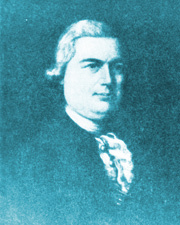 Senate Years of
Service:
1790-1795; 1795-1801;
1801-1803 Senate Years of
Service:
1790-1795; 1795-1801;
1801-1803 Party:
Pro-Administration; Federalist; Republican
FOSTER, Theodore, (brother
of Dwight
Foster),
a Senator from Rhode Island; born in Brookfield,
Worcester County,
Mass.,
April 29, 1752; pursued classical studies and
graduated from Rhode
Island
College (now Brown University), Providence, R.I., in
1770; studied law;
was admitted to the bar about 1771 and commenced
practice in
Providence,
R.I.; town clerk of Providence 1775-1787; member,
State house of
representatives
1776-1782; appointed judge of the court of admiralty
in May 1785;
appointed
Naval Officer of Customs for the district of
Providence, R.I., 1790;
appointed
to the United States Senate in 1790; elected in 1791
and again in 1797
as a Federalist and served from June 7, 1790, to
March 3, 1803; was not
a candidate for reelection in 1802; retired from
public life and
engaged
in writing and historical research; member, State
house of
representatives
1812-1816; trustee of Brown University 1794-1822;
died in Providence,
R.I.,
January 13, 1828; interment in Swan Point Cemetery.
At the time of the Gaspee attack, at age 20, Theodore Foster had already graduated Brown University, married and had a child, completed a law degree, and began practicing law in Providence, RI. His early completion of his education probably stems from the lack of a formalized educational routine in the eighteenth century, so that he was not held back by the necessity of finishing each school grade level that we have today. We note that his father was a learned man, Judge Jedediah Foster, who had graduated from Harvard University in 1744. Theodore Foster's youthful age at the time of the attack coincides perfectly with the fact that many of the Gaspee raiders were of a like age of 18-24 years. The probability of a shotgun wedding aside, his marriage to the sister of the future governor Arthur Fenner probably contributed to Theodore Foster's interest in both politics and revolution. He also became under the tutelage of Chief Justice Stephen Hopkins Foster was undoubtedly a patriot as he served as Secretary on the Rhode Island Council on War, and was later elected from Rhode Island to the US House of Representatives at its initial session of Congress in 1776, a truly treasonous act against King George III. He served in this capacity until 1782, after which he took various governmental positions (including the Providence School Committee). He was a leading advocate of Rhode Island's ratification of the US Constitution and was later appointed to the US Senate in 1790 and was elected to that position in 1791. He was noted to be a staunch Federalist and an ardent supporter of George Washington. He served in the Senate until 1803 when he semi-retired and concentrated on historical research and writing, much of which was done in association with his friend, Dr. Solomon Drowne. Foster must have been much admired; for despite the fact he grew up in Brookfield, Massachusetts, he was honored when the western section of the Town of Scituate, RI was set off and incorporated in 1781 as the Town of Foster. Senator Foster was also an enthusiastic collector of thousands of documents from colonial Providence, and helped found the Rhode Island Historical Society in 1822. His heirs sold his vast collection to the Society (more than fifty volumes) for a mere three hundred dollars in 1833. Ted's bother, Dwight Foster (1757-1823) also graduated Brown University in 1774 (at age 17?) and also went on to practice law for a while in Providence with his brothers Theodore and Peregrine. Later he returned to his native Massachusetts and became both a US Representative (1791-1800) and later US Senator (1800-1803) from Massachusetts. He would've been about 15 years old at the time of the Gaspee attack, and while improbable, it is possible that he was also a member of the Gaspee raiders. He was at Brown University at the time of the attack, and probably had a close relationship with his older brother, Theodore, who practiced law in Providence. From the 1770
List of Providence Taxpayers, we find that
Theodore Foster owned
property on the west side of the Great Bridge on
Weybosset Street. We
also note the only other incidence of the Foster name
in the list to be
a John Foster, who owned property near the
Providence-Pawtucket line,
but with who we have not been able to establish a
relationship to
Theodore Foster. The RI Historical Society
possesses a
large
collection of unpublished material in the Theodore
Foster Papers, MSS
424. Noted genealogical researcher, Wayne Tillinghast,
citing
correspondence
between John Mawney and Theodore Foster (RI Historical
Society Library
manuscripts Misc. Mss. #9003 4:18) relative to the
events of the
burning of the Gaspee concludes that Foster was
definitely not along
during the raid. On the other hand, he does bring to
light the
assertion by Foster that he was an assistant clerk with
the RI Superior
Court at the time, and was involved in the the "inquiry
which was
Holden by the Supreme Court … for discovering the
persons concerned in
destroying the said vessel...." We do not recollect that
the Supreme
Court conducted its own investigation, only that Chief
Justice Stephen
Hopkins researched the legal matters of the affair and
concluded that
he
would not the British-appointed commission of inquiry in
Newport to
authorize the arrest of suspects and send them off to
England for
trial. We're not sure that status of court clerks were in
1772, but
modern day clerks for courts tend to wield significant
influence over
judicial decisions due to the nature of these people
being the sounding
boards for the justices that employ them. He was,
therefore,
likely complicit in such legal obfucations of the Gaspee
Commission of
Inquiry |
| Genealogical
Notes: According to Ancestry.com and www.whipple.org sources: Theodore FOSTER b 29 APR 1752 in Brookfield MA d: 13 JAN 1828 in Providence, RI
Marriage 2 Esther Bowen MILLARD b: 15 JUN 1785 Married: 18 JUN 1803 Esther was the daughter of Noah Millard of Rehoboth, MA and Hannah BOWENWe've not been able to connect Ted's second mother-in-law Hannah Bowen with known Gaspee raider Ephraim Bowen. His father, Jedediah, was both a judge and a Major. Senator Foster is buried in Providence's Swan Point Cemetery, but we can't ascertain that either wife is buried with him: FOSTER, THEODORE 1752 - 13 JAN 1828 PV003 |
| We
conclude that while there is
weak circumstantial evidence that Senator Theodore
Foster took part in
the
attack on the Gaspee in 1772, it is very unlikely
that he did
so. However, his likely complicity with Justices
of the RI
Superior Court no doubt contributed to the failure of
the British
appointed Royal Commission of Inquiry into the burning
of the Gaspee. |
| Back to Top | Back to Gaspee Virtual Archives |